

The Real Story Behind Halloween
Halloween, one of the most celebrated festivals across the world, is known for costumes, candies, and spooky fun. But beneath the playful surface lies a dark and mysterious history that stretches back over 2,000 years.
The true roots of Halloween are found in ancient Celtic traditions, pagan rituals, and Christian adaptations. In this post, let’s uncover the dark history of Halloween, its ancient rituals, and how it evolved into the holiday we enjoy today.
🕯️ The Celtic Festival of Samhain: The Beginning of Halloween
Long before Halloween became commercialized, the ancient Celts celebrated Samhain (pronounced sow-in) — a festival marking the end of harvest and the start of winter.
They believed that on October 31st, the veil between the living and the dead grew thin, allowing spirits to roam the earth. To ward off these spirits, people lit huge bonfires, wore animal-skin disguises, and offered crops and livestock to the gods.
These customs were the earliest forms of what we now call costumes, bonfires, and trick-or-treating.
🔥 The Dark Side of Samhain: Fire, Fear, and Sacrifice
Though Samhain was a time of festivity, it was also marked by fear and mystery. Ancient folklore suggests that **sacrifices—both animal and human—**may have been performed to honor deities and ensure good fortune for the coming winter.
These acts were believed to keep away evil spirits and maintain harmony between the world of the living and the dead. Whether myth or reality, such stories gave Samhain its dark, chilling aura — one that still echoes in Halloween’s spooky symbolism today.
🍎 The Roman Influence: Feralia and Pomona
By 43 A.D., the Roman Empire had conquered most Celtic lands. The Romans brought their own festivals, Feralia (honoring the dead) and Pomona (celebrating the goddess of fruit).
Pomona’s symbol was the apple, which merged into Celtic customs — giving rise to the “bobbing for apples” game that remains a popular Halloween tradition even today.
⛪ Christianity and “All Hallows’ Eve”
As Christianity spread across Europe, pagan traditions were rebranded rather than erased. In the 7th century, Pope Boniface IV declared November 1st as All Saints’ Day (All Hallows’ Day) — a time to honor saints and martyrs.
The evening before became All Hallows’ Eve, which eventually shortened to Halloween.
Though Christian in name, people still practiced their ancient rituals — lighting fires, dressing in eerie costumes, and sharing ghost tales. Thus, Halloween kept one foot in the world of faith and one in the world of fear.
🧙 The Witch Hunts and Superstitions
During the Middle Ages, Halloween became closely tied to witchcraft and black magic.
Superstitions grew that witches gathered on October 31st to summon dark powers and spirits.
Black cats were feared as witches’ companions, and many innocent people were accused of witchcraft and persecuted.
This period added a sinister layer to Halloween’s reputation — one of mystery, fear, and superstition.
🎃 The Journey to America: From Fear to Fun
When Irish immigrants arrived in the United States in the 19th century, they brought Halloween traditions with them. Over time, it evolved from a night of superstition into a community celebration.
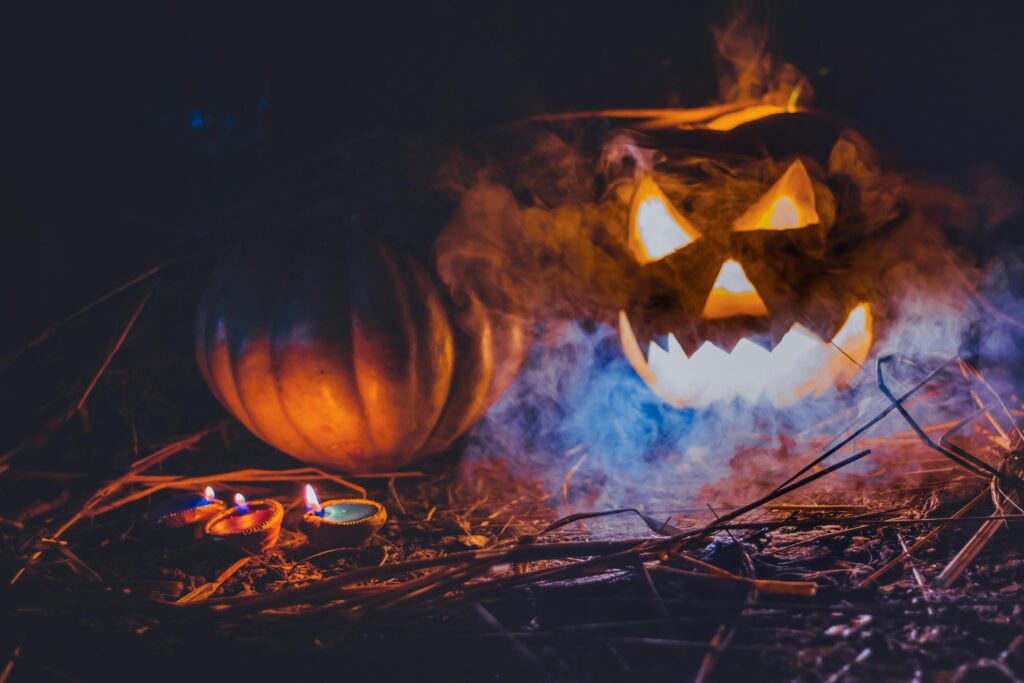
Pumpkins replaced turnips as the preferred carving lanterns, inspired by the Irish legend of “Stingy Jack”, a trickster doomed to wander the earth with a glowing ember inside a hollowed-out gourd — the first Jack-o’-lantern.
Children began going door-to-door asking for treats, and the modern concept of “trick-or-treating” was born.
👻 Modern Halloween: Light, Laughter, and Commerce
Today, Halloween has transformed into a global phenomenon. People enjoy dressing up, throwing parties, visiting haunted attractions, and watching horror films.
Yet, the dark history of Halloween remains a reminder of its deeper meaning — a night once dedicated to the spirits of the dead and the mystical forces of nature.
Halloween now generates billions of dollars in spending on candy, costumes, and decorations, but its ancient spiritual roots still linger beneath the fun.
🕸️ Popular Halloween Superstitions That Still Survive
Even in today’s modern celebrations, many old beliefs persist:
- Seeing a spider on Halloween means the spirit of a loved one is watching over you.
- Black cats crossing your path are still considered unlucky.
- Lighting candles in Jack-o’-lanterns is said to protect your home from evil spirits.
These superstitions remind us how Halloween remains tied to the mystery of life, death, and the supernatural.
🪦 Conclusion: The Mystery Lives On
The dark history of Halloween is a story of evolution — from ancient Celtic rituals to Christian influences to modern celebrations.
What began as a night of fear and fire has become one of fun and fantasy.
But every carved pumpkin and flickering candle still whispers stories of ghosts, gods, and the thin line between the living and the dead.
So next time you celebrate Halloween, remember — you’re taking part in a tradition that’s thousands of years old, born from mystery, myth, and magic.
Recommended Halloween Essentials (Affiliate Picks):